
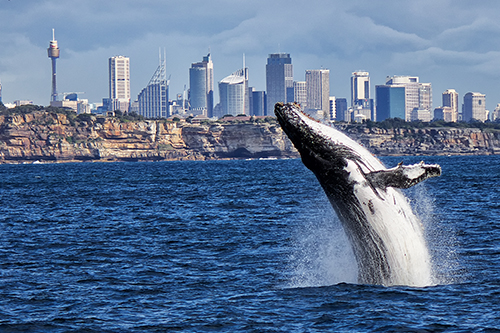
Up to 40,000 humpback whales are estimated to pass by the NSW coastline this year, with around 2000 passing close enough to see from land.
Sydney Harbour is no safe place for whales but every year a few take a detour into the city’s busy waterways.
To help those whales that do decide to see Sydney’s stunning harbour, Port Authority of New South Wales works closely with a network of agencies and organisations to reduce their chance of injury or distress from keep vessels.
The eyes and ears for commercial vessels on the harbour, Port Authority’s Vessel Traffic Services (VTS) team help ships navigate safely and warn them of potential dangers.
Every year, the VTS team, National Parks and Wildlife Service and NSW Roads and Maritime jointly lead a multi-agency operation to protect whales in Sydney Harbour.
When reports of a whale in harbour come in, the VTS team sends out warnings to all vessels across the harbour to keep watch and stay away. While they manage vessel movements, other agencies monitor the whale’s location from land and water while escort vessels set out to create a safe space between the whale and recreational boaters.
Across the harbour, the teams keep close watch and communicate with water traffic until the whale decides to safely head back out to sea.
There are specific regulations in NSW that set how far vessels must stay away from marine mammals.
Vessels must keep a distance of at least 100 m from whales (300m if a whale calf is present), while vessels that can make fast and erratic movements such as jet skis or parasail boats, must stay at least 300 m away. Vessels must travel at a constant slow speed, leave a negligible wake and no more than two vessels are allowed to approach a whale at the same time.
Boat owners should find out the safest way to approach marine mammals in NSW before they head out whale watching this winter.
Sightings of any injured or stranded marine mammals, including whales, dolphins and seals, can be reported from anywhere along the NSW coast to wildlife rescue charity ORRCA through its 24/7 Rescue Hotline on 02 9415 3333.
Latest news
- From the high seas to the big screen: Port Authority helps beam NSW around the world
 From the high seas to the big screen: Port Authority helps beam NSW around the world
 - $50,000 investment making waves for port communities across NSW
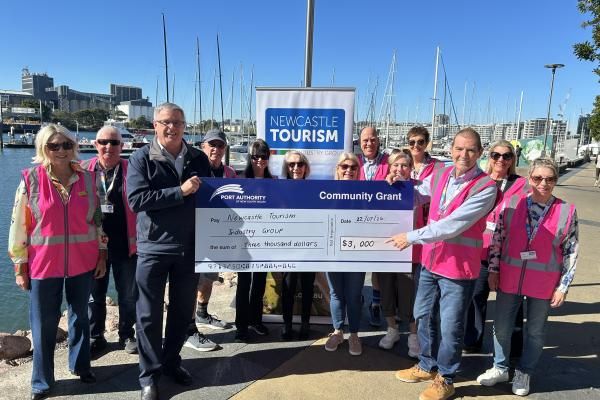 $50,000 investment making waves for port communities across NSW
 - Seafarer Welfare Fund marks $1.5m milestone in third year
 Seafarer Welfare Fund marks $1.5m milestone in third year
